Extractions


At 26 North Dental, your comfort comes first. Our Parkland team works to keep every visit calm and low stress, with gentle, careful treatment and attention that fits you. That steady focus is why so many local families trust us with their smiles.
Saving your natural teeth is always our goal. Sometimes, though, removing a tooth is the healthiest choice for your mouth and your overall well-being.
A baby tooth that won't fall out, or one that is badly decayed or damaged
Most baby teeth loosen on their own as the adult tooth beneath them moves up. Now and then, a baby tooth stays stubbornly in place. Its roots may not have dissolved the way they should, or the tooth may be ankylosed, meaning it has fused to the jawbone. A baby tooth that lingers too long can throw off how your child's smile grows and lines up. We keep an eye on this at each visit and will let you know if removing the baby tooth would help the permanent one come in.
An adult tooth with decay too extensive to repair
A cavity starts as a tiny spot on the outer enamel. Left alone, it keeps eating deeper into the tooth. Over time it can destroy healthy structure, permanently harm the nerve, cause an infection, and affect your health beyond your mouth. When so much of the tooth is gone that it can no longer be rebuilt, extraction may be needed.
An adult tooth that is cracked or broken beyond repair
Teeth can chip, crack, or fracture in many ways. How much sound tooth is left tells us whether it can be saved and which treatment fits. If the break reaches too far, or the root itself is damaged, removing the tooth may be the best option.
Advanced gum disease that has weakened the tooth's support
Gum disease is the leading cause of tooth loss in adults. Without treatment, it attacks the gums and bone that hold your teeth, creating deep pockets, pulling the gums back, and wearing away the bone. Eventually teeth can loosen, fall out, or need to be removed.
Wisdom teeth that are impacted, decayed, or growing in the wrong direction
Wisdom teeth, or third molars, are the last adult teeth to form and the last to arrive. Many don't have enough space, grow in at an odd angle, decay heavily, or crowd and irritate nearby teeth and gums. Older adults sometimes need them removed, but taking out problem wisdom teeth early, in young adulthood, is far more common.
Crowded teeth
When the jaws are too small for all the adult teeth, the result is often a crowded, crooked smile. To create room and a healthy, comfortable, attractive bite, an orthodontic treatment plan may include removing certain permanent teeth.

Whatever brings you in, you're in good hands. We start by going over your medical and dental history with you and talking through anything that might affect your care.
Please tell us about any health conditions you have and every medication you take. Some patients need extra steps first, such as antibiotics before the visit, a medication change, or clearance from their physician. Follow your pre-surgery instructions closely, and call us if you feel sick or notice new symptoms on the day of your appointment.
We want you relaxed and well prepared. Before treatment, we'll explain any precautions and walk you through instructions for before and after. We'll also talk about whether the tooth should be replaced and which options suit you best.
To plan the right approach, we do a thorough exam and take digital radiographs when needed. Most extractions fall into one of two groups: simple or surgical.
A simple extraction is for a tooth that is fully visible and has roots that aren't sharply curved, fused to the bone, or otherwise unusual. After the area is completely numb with local anesthetic, our dentist gently frees the gum tissue around the tooth and lifts it out with forceps. We check on your comfort the whole way through. If dental visits make you nervous, ask us about dental sedation.
Teeth that are badly broken down, ankylosed, or impacted often need a surgical extraction, and we may refer you to an oral and maxillofacial surgeon for this. The procedure involves a small opening in the gum and the careful removal of a little bone so the tooth can be reached. As with any extraction, local anesthetic fully numbs the tooth and nearby tissue. We'll also cover dental sedation choices and every pre-surgery step in detail. Learn more on our oral surgery page.

No two patients heal exactly alike, so your aftercare is built around you. You may receive specific instructions on activity, medication, and follow-up, and in some cases your physician may be involved too. Unless we tell you otherwise, these guidelines apply after a simple extraction.
Keep pressure on the gauze
We'll place gauze over the site before you leave. Bite down firmly as directed to stop the bleeding. You can swap in fresh gauze after the first hour, and if heavy oozing continues, bite down for another 45 minutes. Light oozing for up to 24 hours is normal. Call us if bleeding stays heavy.
Be careful while you're still numb
Until the anesthetic wears off completely, take care not to bite or hurt your lips, cheeks, gums, or tongue.
Use medications exactly as directed
Antibiotics:
If we prescribe antibiotics, take the right dose and finish the entire course.
Pain relief:
Taking a pain reliever before the numbness fades can help. Non-aspirin over-the-counter medicine can ease soreness. Take any prescription pain medicine only as directed.
Protect the blood clot
Skip rinsing, spitting, straws, and sucking on candy. A clot needs to form in the socket and stay put so the area can heal.
Use ice for swelling
Hold an ice pack on your face over the treated area in 10-minute intervals during the first day.
Don't smoke
Smoking keeps a clot from forming and slows healing. Avoid smoking and all tobacco for the first week.
Choose gentle foods and drinks
For the first day or two, avoid hot or spicy foods and drinks, and skip soda and alcohol. Stick to soft foods and liquids for the first couple of days, and drink plenty of fluids.
Clean gently
Brush softly and steer clear of the extraction site for a few days. A mild, lukewarm saltwater solution can freshen your mouth, but don't rinse or spit for the first day or two. Just tip your head and let liquid fall into the sink.
Keep your follow-up visit
If you have stitches, had a complex extraction, or have an infection or other concern, we'll schedule a visit to check your healing. Please be sure to keep that appointment.
Call us if you have bleeding that won't stop, lasting pain, increasing swelling, a bad taste, or anything else that seems unusual. For urgent problems, see our emergency dentistry page.
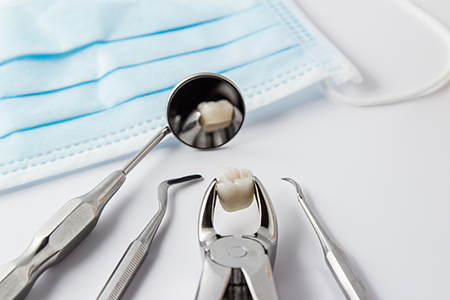
Your care should fit you, not a template. At 26 North Dental, we provide gentle, precise treatment and keep you informed and at ease from start to finish. If your tooth should be replaced, we'll review your options, including dentures, fixed bridges, and dental implants. Dental implants are the most advanced way to replace a tooth and come closest to the look, feel, and function of a natural one. Ready to talk it over? Contact our Parkland office.
Book a consultation with Dr. Bennett and take the first step toward a smile you are proud to share.
Before any extraction, local anesthetic fully numbs the tooth and the surrounding tissue, so you should feel pressure rather than pain. Our team checks on your comfort throughout the visit.
Some soreness is common once the numbness wears off. Taking a pain reliever before the anesthetic fades can help, and non-aspirin over-the-counter medicine often eases discomfort. If you feel anxious about dental visits, ask about dental sedation options.
Your dentist decides after a thorough exam and, when needed, digital radiographs. A simple extraction is for a tooth that is fully visible with roots that are not sharply curved or fused to the bone.
Teeth that are badly broken down, ankylosed, or impacted often need a surgical extraction. In some cases, we may refer you to an oral and maxillofacial surgeon for this type of procedure.
Healing is different for everyone, which is why your aftercare plan is built around you. Light oozing for up to 24 hours is normal, and most guidelines focus on the first few days, such as soft foods and avoiding the extraction site while brushing.
Avoid smoking and tobacco for the first week. If you had stitches, a complex extraction, or an infection, we'll schedule a follow-up to check how you're healing.
For the first couple of days, stick to soft foods and liquids, and drink plenty of fluids. Avoid hot or spicy foods and drinks, and skip soda and alcohol during the first day or two.
Don't use straws or suck on candy, since that suction can disturb the blood clot that needs to form in the socket. Wait until the numbness is completely gone before eating so you don't accidentally bite your cheek, lip, or tongue.
The clot that forms in the empty socket protects the area and allows it to heal properly. If it is disturbed or fails to form, healing can slow down.
To protect it, avoid rinsing, spitting, drinking through straws, and sucking on candy for the first day or two. Smoking also keeps a clot from forming, so avoid all tobacco for the first week.
Often, yes, and our team will talk with you about whether replacement makes sense for your situation before treatment. Options include dentures, fixed bridges, and dental implants.
Dental implants are the most advanced way to replace a tooth and come closest to the look, feel, and function of a natural one. Your dentist will help you weigh which option suits your needs best.
Tell us about any health conditions you have and every medication you take. Some patients need extra steps first, such as antibiotics before the visit, a medication change, or clearance from their physician.
Follow your pre-surgery instructions closely. If you feel sick or notice new symptoms on the day of your appointment, call us before coming in so we can decide how to proceed.
Not always, but a baby tooth that stays too long can affect how your child's smile grows and lines up. This can happen when the roots don't dissolve as expected or the tooth has fused to the jawbone.
At 26 North Dental, we monitor this at each visit and will let you know if removing the baby tooth would help the permanent tooth come in.
Contact our Parkland office if you notice any of the following:
For urgent problems, please see our emergency dentistry page.
During the first day, hold an ice pack on your face over the treated area in 10-minute intervals. Some swelling is a normal part of healing.
Following the rest of your aftercare, like avoiding hot foods, protecting the clot, and not smoking, also supports smoother healing. If swelling keeps increasing instead of improving, call our team so we can check on you.
Mon to Thu 8:30 AM to 5:00 PM
Fri 8:30 AM to 2:00 PM