Oral Exams


At 26 North Dental in Parkland, we believe the easiest problems to fix are the ones caught early. Regular checkups give us the chance to spot trouble before it grows, so you and your family can avoid many common dental issues altogether. Our preventive care includes thorough exams, professional cleanings, and oral cancer screenings. We also share practical guidance on brushing, flossing, diet, and daily habits that support your smile.
Your first visit gives us a clear picture of where your oral health stands today. It also helps us learn what matters most to you about your smile.
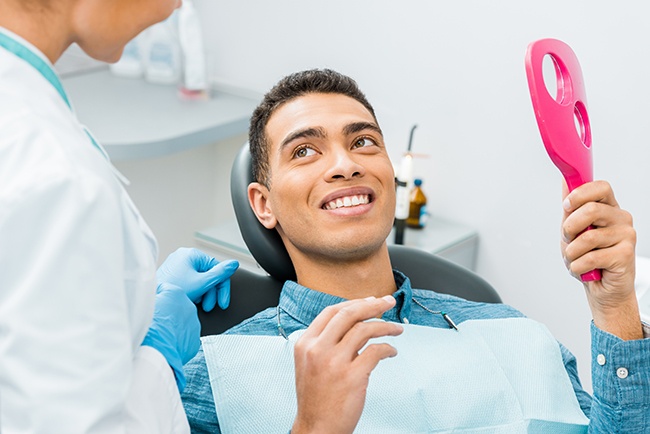
We start by talking. We go over your medical and dental history and listen closely to any concerns or symptoms you have noticed. Next comes a careful clinical exam that includes an oral cancer screening, a periodontal (gum) evaluation, and a check of how your upper and lower teeth meet when you bite.
When diagnostic images are needed, we will recommend and take them. We look at your teeth, the bone and soft tissue that support them, and the nearby areas of your mouth, head, and neck. We watch for signs of clenching or grinding and check how your TMJ (temporomandibular joint) is working. A complete exam can also show how diet, eating disorders, medications, harmful habits, or gaps in your home care may be affecting your teeth and gums.
At 26 North Dental, our team treats every exam with care and pays attention to your comfort. Once we review your exam results and images, we will explain whether any further treatment is needed and walk you through each of your options.

At 26 North Dental, we know a healthy smile does more than look nice. Problems with your teeth, gums, jaws, and the tissues around your mouth can affect how you feel overall. During your exam, we check for tooth decay and gum disease and screen for oral cancer. We also keep an eye out for signs of health issues that may have started somewhere else in the body.
Research continues to find links between poor oral health and wider health problems. Growing evidence suggests dental disease may play a role in conditions such as:
The connection works in both directions. Statistics show that more than 90% of systemic diseases, which affect organs and systems throughout the body, can show signs or symptoms in the mouth. Dry mouth, bad breath, gum problems, sores, or other lesions may point to an underlying medical condition.

A smile that looks and works its best takes ongoing care. That means good daily hygiene, nutritious food, routine checkups, professional cleanings, and a solid preventive plan.
Please do not wait until something hurts to see us. We recommend a checkup and professional cleaning twice a year. These visits let us track your oral health, lower your risk of dental disease, and find small problems early, when treatment is usually simplest.
Even excellent brushers and flossers miss spots between the teeth and along the gumline. During your professional cleaning, our hygienist removes built-up plaque and tartar from those hard-to-reach areas. Because plaque holds the bacteria that cause cavities and gum disease, clearing it away helps stop those problems before they start. We finish by polishing away surface stains, so your mouth feels fresh and clean.
These visits are also a great time to sharpen your home routine. We will show you effective brushing and flossing techniques and answer your questions about caring for your teeth between appointments.
Good dental care matters at every age, and childhood is when lifelong habits take root. Through routine checkups, preventive treatment, and age-appropriate tips, we help children protect their teeth from disease. We also follow how their teeth and jaws develop as they grow and watch for any signs that orthodontic treatment may be needed to align their smiles. Learn more about our family dentistry in Parkland.
We want to help everyone in your family build healthy habits that last. The team at 26 North Dental is proud of our reputation for skilled, caring dentistry, and we work to make each visit a positive one while building lasting relationships with our patients.
A visual exam shows a lot, but some things can only be seen with dental X-rays, also called radiographs. X-rays let us look inside the teeth and at the bone and tissue around them. They help us find disease and give useful information about how your teeth and facial structures are developing and holding up.
X-ray technology has moved from film to digital. Older film methods required long exposure times and chemical developing. Digital sensors and software now capture, store, and organize images electronically.
Digital radiography offers patients several advantages:
The images we recommend depend on the reason for your visit and your individual needs. Here are the most common types and what each one shows:
Detailed 3D imaging is also available today. With cone-beam computed tomography (CBCT), a dentist can capture and reconstruct three-dimensional images of the teeth, jaws, and surrounding anatomy. CBCT is often used for diagnosis, surgical planning, treatment, and precise placement of dental implants.
Ready for your next checkup? Contact our Parkland office to schedule your oral exam.
Book a consultation with Dr. Bennett and take the first step toward a smile you are proud to share.
The length of your visit depends on your needs. A first exam often takes a bit longer because we review your medical and dental history, listen to your concerns, and may take diagnostic images. Routine checkups paired with a professional cleaning tend to move along more quickly.
If you have questions about how much time to set aside, our team is happy to give you a better idea when you schedule.
A routine exam is generally comfortable. Your dentist looks at your teeth, gums, bite, and the soft tissues of your mouth, head, and neck, which usually involves gentle checks rather than anything invasive.
Our team pays close attention to your comfort throughout the visit. If any area feels sensitive, just let us know and we will adjust as we go.
It helps to come prepared with information about your health, since we start by reviewing your medical and dental history. Consider bringing:
Sharing this up front helps us understand what matters most to you.
We recommend a checkup and professional cleaning twice a year. Regular visits let us track changes in your oral health over time and catch small problems early, when treatment is usually simplest.
Your dentist may suggest a different schedule based on your individual needs, and we will talk through that with you after your exam.
Not necessarily. We recommend diagnostic images only when they are needed, and the type depends on the reason for your visit and your individual needs.
X-rays help us see areas a visual exam cannot, such as between teeth, below the gumline, and in the supporting bone. Your dentist will explain why a particular image is recommended before taking it.
Digital radiography uses faster imaging with minimal radiation exposure compared with older film methods. Images also appear on screen right away, so there is no waiting for chemical developing.
If you have concerns about X-rays, including if you are or may be pregnant, please let our team know so your dentist can discuss your options with you.
An oral cancer screening is part of your clinical exam. Your dentist looks at and feels the tissues of your mouth, tongue, and nearby areas of the head and neck for sores, lesions, or other changes that may need a closer look.
It is quick and noninvasive, and it is one more way regular checkups help catch concerns early.
After reviewing your exam results and any images, your dentist will explain what was found and whether further treatment is needed. We walk you through each of your options so you can make an informed choice.
Finding issues early often means simpler treatment, which is one of the main benefits of routine checkups.
Good dental care matters at every age, and early visits help children build healthy habits. Routine checkups let us protect young teeth and follow how teeth and jaws develop over time.
Our team can advise you on when to schedule your child's first visit and what to expect, so the experience feels positive from the start.
Daily habits make a big difference. Brush and floss thoroughly, pay attention to the gumline and the spaces between teeth, and choose nutritious foods that support your smile.
During your visit, we are glad to demonstrate effective brushing and flossing techniques and answer questions about your routine, so you leave with practical tips tailored to you.
Mon to Thu 8:30 AM to 5:00 PM
Fri 8:30 AM to 2:00 PM