Root Canals


Hearing that you need a root canal can feel unsettling, but there is no reason to worry. With today's methods, the treatment feels much like getting a dental filling. It is often the best way to stop a toothache, rescue a damaged tooth, and keep your own natural smile.
Here in Parkland, the team at 26 North Dental relies on the latest technology to deliver careful, gentle treatment. Your comfort guides every step, so you can feel confident that your smile is well looked after.
Root canal therapy succeeds well over 90% of the time. That makes it the most reliable way to keep a tooth that has been badly weakened by decay or injury. A complete set of natural teeth supports both your oral health and your overall health, which is why dentists widely recommend this treatment over pulling the tooth. Across the United States, dentists perform almost 41,000 root canals every day, close to 15 million each year.

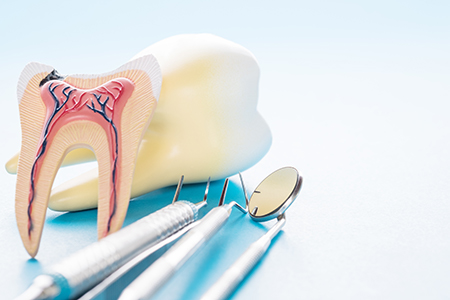
Beneath the hard enamel and down through the roots, every tooth has a hollow center. That space holds the dental pulp: connective tissue, nerves, and blood vessels. The pulp helps a tooth develop before it comes in. Afterward, it feeds the tooth, keeps it alive, and sends warning signals when something goes wrong.
When a tooth aches as you bite, or twinges with hot or cold food and drinks, its nerves are telling you that decay, injury, or infection may be at work. How much it hurts depends on how far the damage has spread and how deeply the nerve is affected.
A root canal becomes necessary once the pulp is permanently damaged or has died. If the tooth still has enough healthy structure and solid bone around it, you can usually avoid an extraction. A fully grown tooth can keep working without its pulp, so a root canal lets you hold on to it.
Not every sore tooth needs a root canal. Still, these signs suggest it is time to have us take a look:
Pain means something is wrong. Mouth pain has many causes, but decay or damage reaching the inner tissue of a tooth is one of the most common. Many people who need a root canal say a toothache wakes them up at night.
If your morning coffee or a cold drink makes you flinch, call our office. Strong, lasting sensitivity to temperature can point to pulp that is inflamed, irritated, or no longer alive.
Pain when you chew, bite, or simply press on a tooth can mean the pulp is involved, the inner tissue is permanently damaged, or an infection is present.
Discoloration often signals that the nerve and blood supply inside the tooth have been harmed. After an injury, a tooth may darken as its inner tissue loses vitality.
A blow that chips or breaks a tooth can injure the pulp, or remove so much structure that a root canal is needed to save what remains.
Swelling around a tooth can mean infection. It may grow worse and lead to more serious problems, or an abscess may begin draining pus. Either way, prompt care is needed.
Problems inside a tooth that needs a root canal can damage the surrounding bone and make the tooth feel loose. Treatment often helps as the tissues heal.

Some of these signs can point to other dental issues, yet every one of them deserves a prompt visit. Sometimes a tooth needs a root canal before it causes any symptoms at all. We may spot it during a comprehensive, routine exam, where X-rays reveal trouble at the root tip (periapical pathology) or other structural damage.
Once a root canal is recommended, try not to put it off. Waiting raises the chance of wider, more painful problems. A dental infection can harm your mouth and even affect your general health. If you are in pain now, see our emergency dentistry page.
Thanks to modern instruments and refined techniques, a non-surgical root canal is often as comfortable as a routine filling.
Some root canals are finished in a single visit, while others take 2 or 3 appointments. The timeline depends on how many canals the tooth has, its shape, and whether there is an active infection.
Your dentist removes the diseased pulp, cleans the inside of the tooth, and fills each prepared canal with a biocompatible material. We use local anesthesia, and dental sedation options are available if dental visits make you anxious.
At 26 North Dental, we want you comfortable and informed from start to finish, with the goal of lasting oral health. Here is what you can expect once your root canal is done:
Numbness usually fades within an hour or two. Until it does, take care not to bite your lips, cheeks, gums, or tongue. Be careful with chewing, hot drinks, and smoking.
The treatment relieves toothache pain, but you may feel mild to moderate soreness as the anesthesia wears off. This should ease within days. To limit pressure, we may smooth the biting surface of the tooth slightly so it does not hit first when you bite. We will suggest suitable over-the-counter pain relief and give you a prescription if needed.
If we prescribe antibiotics to treat or prevent infection, take the full course exactly as directed.
Even with a temporary filling, the treated tooth can crack under stress until a permanent crown or other lasting restoration is placed. Chew on the other side and skip hard or sticky foods for now.
Protect the tooth, but keep up your daily brushing and flossing. Good hygiene helps you heal and prevents new problems.
A treated tooth needs a permanent crown or similar restoration to regain its strength. Until then, it is fragile and can fracture. The sooner it is restored, the sooner you can chew comfortably again. Learn more about our crowns and caps.
With good care, a tooth that has had a root canal can last a lifetime.
Our Parkland team at 26 North Dental is committed to excellent care. If you have questions, lingering discomfort, or any signs of infection after your procedure, contact our office and we will help you promptly.
Book a consultation with Dr. Bennett and take the first step toward a smile you are proud to share.
Most patients are surprised by how comfortable the treatment is. Your dentist numbs the area with local anesthesia first, so the experience feels much like getting a routine filling. In fact, a root canal usually relieves the toothache that brought you in.
You may notice mild to moderate soreness for a few days as the anesthesia wears off. Over-the-counter pain relief is often enough, and our team will let you know what is suitable for you.
Yes. If dental visits make you nervous, dental sedation options are available in addition to local anesthesia. Sedation can help you feel calm and relaxed while your dentist works.
Let our team know about your concerns when you schedule, and we can talk through which option may be a good fit for your needs and comfort level.
Some root canals are completed in a single visit, while others need 2 or 3 appointments. The timeline depends on how many canals the tooth has, the shape of those canals, and whether there is an active infection that needs to clear.
Your dentist will review your X-rays and explain the expected number of visits before treatment begins, so you can plan ahead.
When a tooth can be saved, keeping it is usually the better choice. Root canal therapy succeeds well over 90% of the time, and a complete set of natural teeth supports both your oral health and your overall health.
Extraction may be considered when a tooth lacks enough healthy structure or supporting bone. Your dentist will examine the tooth and explain your options honestly.
Putting off a recommended root canal raises the chance of wider and more painful problems. An infection inside the tooth can spread, cause swelling or an abscess, damage the surrounding bone, and even affect your general health.
Delaying can also leave less healthy tooth structure to work with, which may make saving the tooth harder. Prompt care gives you the best chance of keeping your natural tooth.
In most cases, yes. A treated tooth needs a permanent crown or similar restoration to regain its strength. Until it is restored, the tooth is fragile and can crack or fracture under normal chewing pressure.
Scheduling your final restoration soon after treatment protects the tooth and helps you get back to chewing comfortably sooner.
Wait until the numbness wears off, usually within an hour or two, so you do not accidentally bite your cheek, lip, or tongue. Be careful with hot drinks during that time too.
Until your permanent crown or restoration is placed, chew on the opposite side and avoid hard or sticky foods. Softer foods are a good choice while the tooth is still protected only by a temporary filling.
With good care, a tooth that has had a root canal can last a lifetime. A key step is getting a permanent crown or other lasting restoration so the tooth stays strong.
After that, keep up daily brushing and flossing and continue routine checkups so your dentist can monitor the tooth and catch any new issues early.
The cost varies from patient to patient. Common factors include which tooth is treated, how many canals it has, whether an infection is present, how many visits are needed, whether you choose sedation, and the type of final restoration, such as a crown.
Our team will review your treatment plan with you and answer questions about costs before your procedure begins.
Mild soreness that eases over a few days is normal. Contact our office if you have discomfort that lingers or worsens, swelling, signs of infection, or if your temporary filling feels loose or the tooth feels like it hits first when you bite.
Our Parkland team is happy to answer questions and will help you promptly if anything does not feel right during your recovery.
Mon to Thu 8:30 AM to 5:00 PM
Fri 8:30 AM to 2:00 PM